
Collective bargaining - Working for the workers of Israel
For trade unionists, collective bargaining is the ultimate expression of worker solidarity, turning individual vulnerability into collective strength. At the Histadrut, we bargain to secure comprehensive terms of employment, including fair wages, robust health and safety policies, balanced working hours, and family leave.
Collective bargaining ensures that everyone reaps the benefits of technological progress and globalisation. In Israel, this tool is supported by a robust legislative framework that extends worker protections well beyond the baseline.
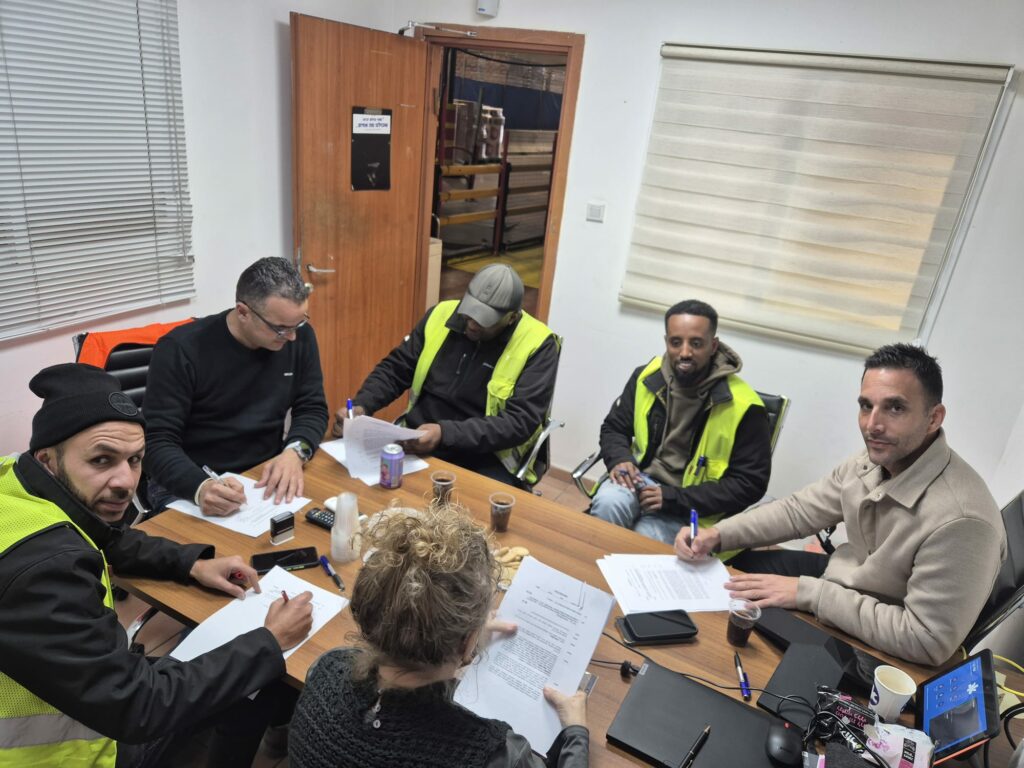
How collective agreements work under Israeli law
The foundation of our bargaining power is anchored in the Collective Agreements Law, 1957 (downloads a file). The Israeli legal framework has several unique mechanisms designed to protect workers and maintain the integrity of union contracts:
- The baseline rule: Rights established in a collective agreement automatically become part of a worker’s individual contract. An individual contract can add to these rights, but it can never diminish them.
- No opt-outs: Workers cannot legally waive the rights granted to them in a collective agreement, which prevents employers from pressuring individuals into worse terms.
- Automatic continuance: Agreements are valid for the period specified within them. However, if neither party sends a formal termination notice, the agreement automatically remains valid indefinitely.
- Official registration: To be legally binding, all collective agreements must be signed in writing by the union and employer(s) and formally registered with the Ministry of Labor. Registered agreements can be found here.
The landscape: How collective bargaining spreads across Israel
Collective bargaining in Israel does not operate in a vacuum; it is structured to cover both single workplaces and entire economic sectors. Approximately 30% of Israel’s total workforce is covered by one or more collective agreements.
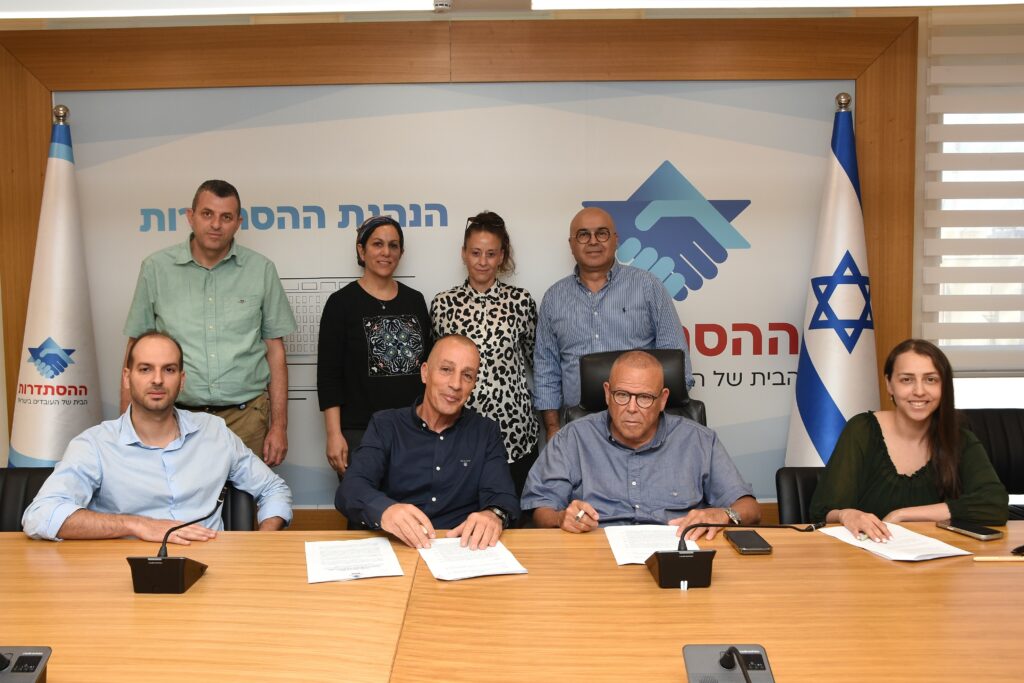
The system differentiates between two primary types of agreements, alongside a powerful legal tool known as an Extension Order:
1. Special collective agreements
These are micro-level agreements negotiated for a single workplace or employer. They allow the Histadrut to tailor specific benefits, safety protocols, and operational structures to the unique needs of that exact workforce.
2. General collective agreements
These are macro-level agreements negotiated between the union and an entire employers’ association. They establish industry-wide standards across a specific sector (such as construction, manufacturing, or agriculture) or, in some cases, the entire national workforce.
An example from 2026, is the successfull negotiation on an agreement that increases the annual rates for Convalescence Pay (Dmei Havra’ah) for the entire public sector. Convalescence Pay is a legally mandated annual bonus intended to fund rest and recreation based on a worker’s tenure. This victory puts more money directly back into the pockets of working families.
3. Extension Orders — A unique multiplier
One of the most powerful features of the Israeli labour model is the Extension Order. The Minister of Labour has the legal authority to take a specific Collective Agreement and extend its provisions to all employees and employers in the same sector, even if they were not originally party to the agreement or members of the union.
These orders normally apply to the weaker sectors. Through these orders, the Histadrut can secure critical baseline rights, like travel allowances, pension contributions, or extra vacation days, for thousands of unorganised workers, preventing non-union companies from undercutting union labour.
The tools of collective bargaining and dispute resolution in Israel
For any union, bargaining power relies on a clear, legal pathway from good-faith negotiation to direct collective action. Based on the Collective Agreements Law of 1957, the Histadrut utilises a specific sequence of tools to bring employers to the table and protect our members’ rights.
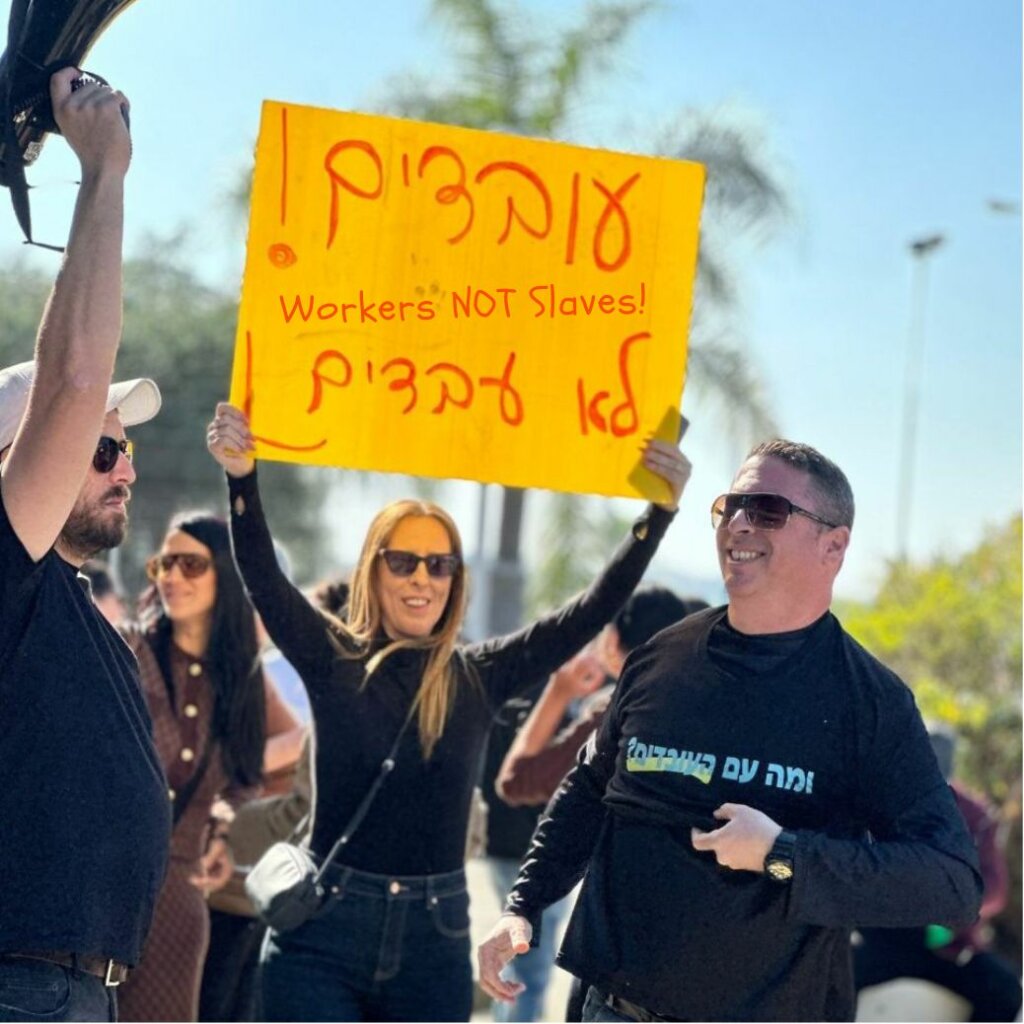
1. The statutory duty to negotiate
Under Israeli labour law, once the Histadrut is recognised as the representative union in a workplace (requiring at least one-third of the employees to sign up), the employer faces a statutory duty to negotiate in good faith. Employers cannot simply ignore the union or stall indefinitely without facing severe legal and financial penalties from the Labour Courts.
2. Declaring a labour dispute
When negotiations stall or an employer attempts to make unilateral changes to working conditions, the Histadrut triggers the formal dispute mechanism. We file an official Declaration of a Labour Dispute with both the employer and the Ministry of Labour.
A 14-Day Cooling-Off Period then commences. During these two weeks, no industrial action can be taken, and the parties are frequently called to government-backed mediation talks to reach a resolution before escalation.
3. Organisational measures and sanctions
If the 14-day window expires without a resolution, the Histadrut gains the legal right to implement organisational measures. These are targeted, proportional sanctions designed to apply economic pressure without jumping immediately to a total shutdown:
- Work-to-rule: Employees perform their duties strictly in accordance with the terms of their contracts, refusing any voluntary overtime or extra tasks.
- Partial strikes: Halting specific departments, blocking administrative tasks, or slowing down production lines.
4. The right to strike
The strike is the ultimate socio-economic right in a democracy, and it is firmly protected within Israel’s legal framework. When all diplomatic avenues fail, the Histadrut can authorise a total strike. In Israel, this can range from a localised strike at a single factory to a General Strike that shuts down the public sector, seaports, airports, and major industries simultaneously to demand systemic macroeconomic changes.
5. Adjudication via the specialised labour courts
Unique to Israel is a dedicated, separate judicial branch: the Labour Courts. Rather than standard civil courts, these benches are staffed by specialised labour judges alongside appointed public representatives from both labour unions and employers’ associations. The Histadrut aggressively uses these courts to enforce existing collective agreements, prevent union-busting, and secure temporary injunctions against employers who violate workers’ rights.