Adam Blumenberg
Between green fantasy and burning reality: Can Israel afford to shut down Bazan?
26.02.26
The transition to a low-carbon economy represents both one of the greatest economic opportunities and one of the greatest social challenges of the coming decades. A successful transition should strengthen productivity, create high-quality jobs, enhance economic resilience, and improve long-term competitiveness while advancing environmental sustainability. A successful transition should simultaneously promote environmental sustainability, economic competitiveness, high-quality employment, and social justice. Climate policy and labour policy should therefore be designed together, ensuring that environmental progress also strengthens economic resilience and social cohesion.
A “Just Transition” ensures that workers and communities benefit from this transformation through investment, innovation, skills development, and social dialogue, while supporting those whose jobs are directly affected by structural change.
In 2015, the ILO estimated that over 24 million new jobs could be created by 2030 if the world adheres to the international climate treaty adopted in Paris that year. However, these gains do not directly or immediately offset the hardship felt by many workers, as approximately 6 million jobs in carbon-intensive sectors have been facing phase-outs or fundamental restructuring.
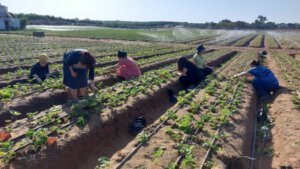
In Israel, over 1.27 million workers face direct climate-related risks across three core operational spheres. First, approximately 250,000 employees work in carbon-intensive sectors, such as fossil-fuel energy generation, chemical manufacturing, and heavy industry, which are subject to downsizing, structural overhauls, or eventual closure. Second, over 300,000 outdoor and physical labourers, primarily in construction, public transport, agriculture, and municipal maintenance, are exposed to severe weather hazards and extreme heat. Third, hundreds of thousands of additional workers face shifting job requirements and heightened physical strains without adequate institutional safety standards.
Addressing these vulnerabilities requires updated occupational health and safety regulations that reflect the realities of a changing climate. Most Israeli workplaces currently lack comprehensive protocols and guidelines for extreme heat. Israel must immediately establish legally binding heat-exposure limits, mandatory rest cycles, and climate-resilient workplace infrastructure. Negotiating collective bargaining agreements at the sectoral and enterprise levels ensures that workplace transitions are planned well in advance, preventing sudden closures and maintaining transparency regarding job changes. Furthermore, protecting domestic production, including agriculture and dairy, is vital to securing national food security, economic resilience, and essential economic anchors in Israel’s peripheral regions. Recent global crises have demonstrated that resilient domestic food production reduces dependence on vulnerable international supply chains during wars, pandemics, and climate-related disruptions.
To secure the future of work, proactive human-capital planning is essential. State-funded, targeted vocational retraining, encompassing upskilling and reskilling programmes, must be guaranteed, particularly for low-skilled, older, or marginalised workers at risk of employment displacement or dead-end jobs. Comprehensive social safety nets, including bridge pensions and transition income support, are equally crucial for employees moving between jobs or sectors due to climate risks and policies. Crucially, all public investments in green infrastructure, such as public transport, solar energy, and circular industries, must be contingent on the creation of high-quality, unionised jobs backed by strong collective agreements.
A Just Transition requires structured and institutionalised social dialogue between governments, employers, and trade unions. International experience demonstrates that involving workers’ representatives early in the design of transition policies improves both implementation and public legitimacy. We demand climate governance that incorporates statutory labour representation. Specifically, the Histadrut calls on the government to designate the Ministry of Labour as a statutory member of the Ministerial Climate Committee, establish dedicated climate-labour working groups, and mandate union consultation before introducing environmental regulations or industrial phases that affect local employment.


The internal bodies driving our strategic agenda on law, policy, regulations, and collective agrrements to protect workers from climate change and the shift to low-carbon economy

Provides economic analyses, policy planning, and research that guide the Histadrut’s positions and agendas. It acts as an economic advisory body to the Histadrut leadership, trade unions, and local worker committees on all matters relating to intersectoral issues, sectoral bargaining and factory-level collective bargaining.
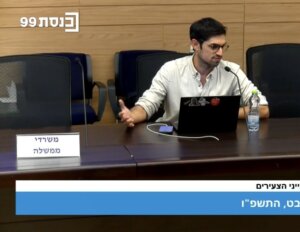
The Government Relations Division works closely with the executive and legislative branches of the State of Israel, engaging in lobbying and advocacy on behalf of Israel’s working men and women.
The Division is at the forefront of the political arena, promoting Histadrut values and, in this case, worker-centred policies regarding the impacts of global warming, industrial changes aligned with green policy, and just transition.
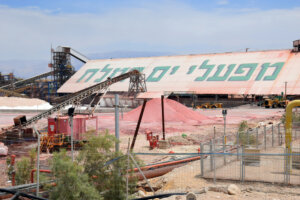
The union actively integrates environmental justice into collective bargaining to protect field labourers and factory workers working under extreme heat. In heavy industrial sectors, the union fights for comprehensive “just transition” frameworks to ensure that chemical manufacturing facilities undergoing restructuring do so transparently, with minimal job security or worker rights sacrificed.

The union actively standardises the construction sector by modernising professional training, harmonising payslips, and promoting up-to-date health and safety practices responsive to industry shifts, climate change, and war. Recognising that the vast majority of unionised members are foreign migrant workers, the union works to elevate industry discipline and professional standing while ensuring foreign workers are fully protected and educated on regulatory laws.

Serving as the Histadrut’s socio-economic research institute, the Arlozorov Forum provides the empirical foundation for trade union policy on the green economy and a just climate transition. By examining local perceptions of climate change alongside global strategies for Just Transition, the Forum generates the evidence base for actionable policy frameworks. These frameworks help the Histadrut guide Israel’s shift to a low-carbon economy in a way that can actively reduce inequality and protect worker livelihoods rather than deepening socio-economic displacement.
Research, policy briefs, and strategic documents to further understanding of how green policy, the green economy, and climate change can affect workers and the workforce, and how Just Transition should be implemented to protect workers.