Naamat
Histadrut and Na’amat Demand Immediate Government Action to Combat Violence Against Women
15.11.26
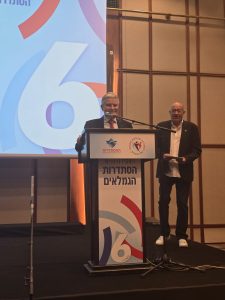
At the Sixth Convention of the Histadrut Retirees, one idea resonated throughout the gathering: older people are not a burden on society. They are one of its greatest assets.
As populations age across Israel, Europe, and much of the developed world, the debate about ageing is often framed around costs, healthcare, and welfare. Yet speakers at the convention presented a different vision. They argued that longer life expectancy should be viewed as a success story and that older citizens must be recognized not only as beneficiaries of policy but as active participants in shaping it.
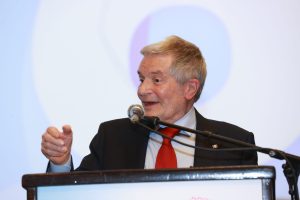
In a keynote address, Dirk Jarré, President of EURAG, the European Federation of Older Persons, called for a fundamental shift in how societies view ageing. He argued that older people should not be defined by dependency but by their continued contribution to communities, institutions, and democratic life.
His message was straightforward: participation is a right. Older citizens possess experience, knowledge, and perspective that are invaluable to public decision-making, yet they are too often excluded from discussions about policies that directly affect their lives. Whether the issue is pensions, healthcare, transportation, housing, or social services, older people deserve a seat at the table.
Jarré warned against the persistence of ageism in public discourse and challenged governments, civil society organizations, and the media to move beyond stereotypes. The principle he championed, “Nothing about us without us,” captures a simple democratic truth: people should not be governed without meaningful involvement in decisions affecting their future.
While Jarré provided the international vision, Efraim Koren, Director General of the Histadrut Retirees Association, outlined how that vision can be translated into action in Israel.
Presenting the resolutions adopted by the convention, Koren detailed an ambitious agenda for the coming years. The priorities include strengthening retirees’ economic security, improving healthcare and long-term care services, expanding opportunities for lifelong learning, promoting digital literacy, and combating loneliness and social isolation.
At the heart of the agenda is the conviction that dignity in retirement requires more than financial support. It requires access to quality healthcare, opportunities for continued engagement, and the ability to remain independent and active within the community.
Economic security remains a central concern. Rising living costs continue to place pressure on retirees living on fixed incomes, making pension protection and financial stability critical public policy challenges. Convention participants stressed that those who spent decades contributing to the workforce deserve to live their later years with security and dignity.
The convention also underscored the growing political significance of Israel’s retirees. Following the re-election of Shmulik Mizrahi as Chair of the Histadrut Retirees, participants called for a stronger national focus on issues affecting senior citizens.
Among the key demands was comprehensive reform of long-term care services. As life expectancy rises, the need for a sustainable national framework for nursing care becomes increasingly urgent. Participants argued that families should not face uncertainty or financial hardship when confronted with the care needs of ageing relatives.
National leaders echoed these concerns. Arnon Bar-David, Chair of the Histadrut, emphasized that retirees remain an integral part of Israeli society and deserve security and dignity not as an act of charity but as a matter of right. Acting Histadrut Chair Roy Yaakov reinforced the organization’s commitment to advancing retirees’ interests in government and parliament.
The convention also highlighted the unique challenges confronting older women. Hagit Pe’er, Chair of Na’amat, noted that women comprise the majority of Israelis over the age of 65 and are more likely to experience lower retirement incomes due to persistent wage gaps accumulated throughout their working lives. Any serious ageing strategy, she argued, must address those inequalities.
What made the convention noteworthy was the clear alignment between global principles and practical policy proposals. The speakers shared a common belief: ageing should not be associated with withdrawal from society but with continued participation in it.
Older people remain volunteers, caregivers, workers, mentors, community leaders, and engaged citizens. Their experience enriches public life, strengthens communities, and contributes to wiser decision-making. As societies grapple with demographic change, the challenge is not simply how to care for older generations. It is how to ensure that their voices continue to be heard.
The message from the convention was ultimately a hopeful one. Longer lives are among humanity’s greatest achievements. The task now is to build societies that recognize the value of older citizens and create opportunities for them to remain involved, influential, and respected.
A healthy democracy does not silence people as they age. It listens to them. And as the leaders gathered at the Histadrut convention made clear, the future strength of our societies may depend on exactly that.