Eliezer Belo re-elected to lead Israel’s food, pharmaceutical and catering workers
Eliezer Belo has been unanimously re-elected for a second term as Chair of the Food, Pharmaceutical and Catering Workers’ Union. The decision was taken last week, at the union’s 9th Conference, held at Airport City, where delegates also elected the union’s central committee and secretariat.
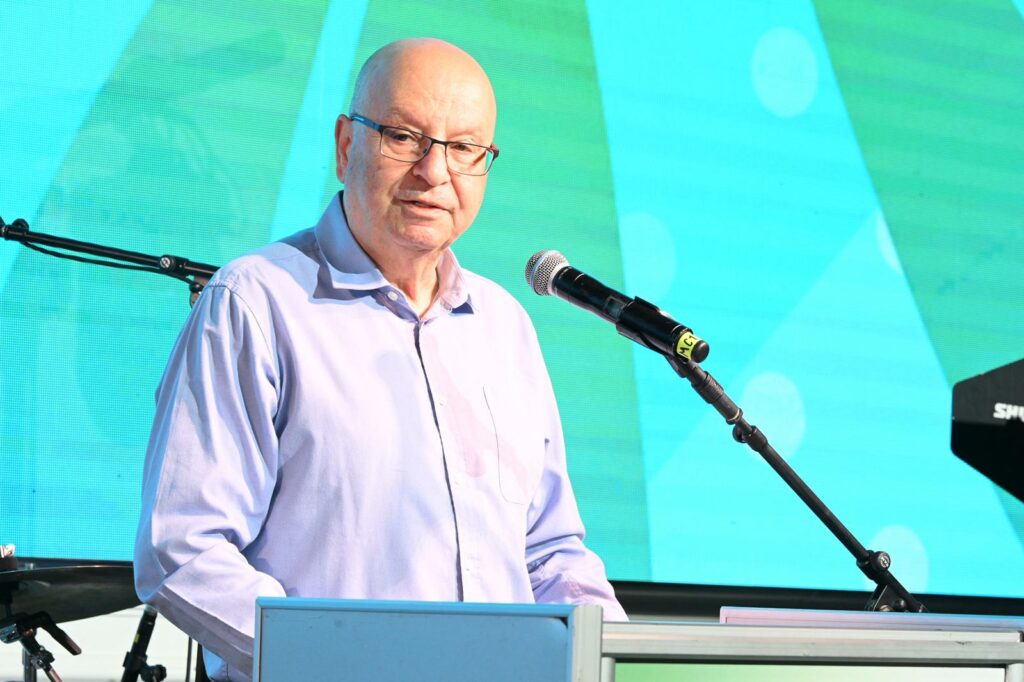
Belo, 64, first assumed the role in 2021 after serving five years as acting chair. His re-election reflects broad confidence in his leadership during a period marked by economic uncertainty, war, and mounting pressure on essential workers. The union represents approximately 30,000 members across Israel, including workers in food production, pharmaceuticals, and institutional catering, as well as thousands more covered under sectoral collective agreements.
Speaking to the conference after the vote, Belo emphasised the union’s responsibility to strengthen workers’ bargaining power, particularly in vulnerable sectors.
“Our role as a trade union is to lift workers up, especially in weakened industries, and ensure they can support their families with dignity,” he said, highlighting that the union has signed more than 200 collective agreements nationwide during his last term.
From grassroots activism to national leadership
Belo’s trade union path began at a young age in the NOAL Youth Movement, where he started as a teenage garage worker before becoming an instructor, organiser, and eventually a union official. Since 2006, he has served as a national division secretary within the Food and Pharmaceutical Workers’ Union, building a reputation for hands-on leadership and close ties to shop-floor committees.
Among the union’s most significant achievements under his leadership is a sector-wide agreement in the catering industry, which raised the minimum wage in the sector to 7,281 shekels, setting a new benchmark for low-paid service workers. The union has also expanded welfare provisions, promoted gender equality, and advanced safety standards, particularly in institutional kitchens and industrial workplaces.
Essential workers during the crisis
Conference speakers repeatedly underscored the role of food and pharmaceutical workers during Israel’s recent years of crisis and war. Throughout periods of disruption, workers continued producing food and medicines, keeping supply chains functioning even under fire.
Histadrut Chair Arnon Bar-David praised Belo’s leadership and the workforce he represents, stating:
“Food and pharmaceutical plants are the strength of the State of Israel. These workers returned to production under the most difficult conditions, this is national resilience in action.”
Bar-David also reiterated the Histadrut’s demand that all workers affected by the war, those organised and unorganised alike, receive full compensation from the first day of absence, and called on the government to ensure wage protections in essential industries.
Conference resolutions: welfare, safety and sustainability
Beyond the leadership vote, the conference adopted a series of forward-looking resolutions, including calls to:
- Improve work–life balance through paid extensions of parental leave and shorter workweeks
- Expand subsidised childcare and reduce gender pay gaps
- Anchor the right to disconnect and regulate flexible employment models through collective bargaining
- Strengthen occupational safety enforcement, particularly in catering and food production
- Integrate industrial sustainability clauses into collective agreements
- Deepen international cooperation, including ties with the global food workers’ federation, IUF

The Histadrut celebrates Belo’s experience and leadership, which demonstrates that strong unions can secure wage floors, safety standards, and social protections in the foundational industries that sustain daily life. We reaffirm the Federation’s commitment to continuing to support the Food and Pharmaceutical Workers Union in advancing fair employment, safer workplaces, and improved living conditions for all workers.
Information for this article was taken from this article published by Davar.
Might interest you as well




10 Weeks into the War: Unravelling the Impact of the Conflict on Economy and Society


Workplace Democracy - Histadrut Delegation Visits Germany to Learn About Employee Participation in Decision-Making in the Workplace




"There Are No Good Jobs On A Dead Planet" – Histadrut representatives speak on the impact of climate change on labor relations and the future of work.

Histadrut brings Israeli and Palestinian businesswomen together to build bridges and talk business.

Opinion: The OECD report on Israel ignores one major thing – the citizens of Israel