Na’amat leads national push to secure full wages for daycare workers
After weeks of uncertainty and intense negotiations, daycare workers in Israel’s state‑supervised early‑childhood centres have secured a crucial victory: full salaries for the days they were unable to work during the war. It is a significant shift from the government’s original proposal, which offered only 75 per cent wage compensation, and only two months later, in May, to caregivers in centres such as those operated by Na’amat. Thanks to the organisation’s strong opposition and persistent advocacy, the state was forced to revise its plan for workers in the supervised 0–3 system.
Israel’s early‑childhood landscape is divided sharply between two systems. Public kindergartens for children aged three and above are part of the mandatory education framework and therefore protected by clear state obligations, including during national emergencies. In contrast, daycares for infants and toddlers aged 0–3 function under fragmented regulation. Although some, like Na’amat’s centres, are overseen and partially funded by the state, early education is not compulsory, and these protections do not extend uniformly. As a result, workers, who are mostly women, are left without the safety net and employment guarantees enjoyed by kindergarten teachers.
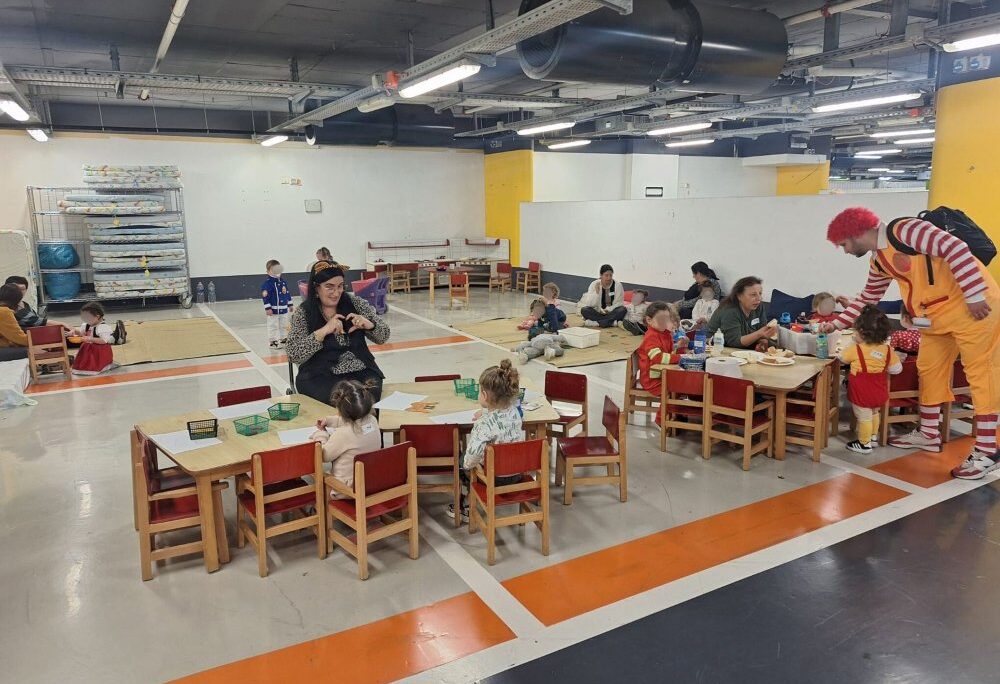
Challenging a harmful wage proposal for daycare employees
Na’amat Chairwoman Hagit Pe’er made Na’amat’s position clear to the government in a letter sent to the Prime Minister, the Minister of Education and the Finance Minister, asserting that daycare facilities must be treated as educational institutions, not private businesses left to bear the consequences of a national emergency.
Two weeks into the war, Na’amat confronted the Ministry of Finance’s proposal that would have significantly disadvantaged daycare workers. The proposed compensation outline stated that caregivers in closed facilities would be forced into unpaid leave and receive only 75 per cent of their salaries. That compensation will only be paid in May, a two-month delay in income. For many of the sector’s workers, this structure threatened both financial stability and dignity, as the sector already suffers from low wages across the board.
“We are not a business but an educational institution, and we expect to be treated as such.” Pe’er stressed that the workers employed by Na’amat were providing essential services equal in importance to those in state-run kindergartens, which were also closed during the conflict. Kindergarten teachers’ compensation will benefit from the agreements made for the public sector.
“Our workers are as essential as those in kindergartens, and according to the outline, our workers will go on unpaid leave and see 75 percent of their salary only in May. It is simply not fair.”
Hagit Pe’er, Chairwoman of Na’amat

In a comment to Davar’s article, Pe’er emphasised that the organisation was fighting on two fronts simultaneously: ensuring full wages for all daycare employees and guaranteeing refunds for parents during periods when facilities were closed.
After sustained advocacy, Na’amat achieved a significant breakthrough yesterday. State-supervised daycares, such as those operated by the organisation, reached a joint agreement with the Labour and Finance Ministries. Under the new arrangement, daycare workers in state-supervised institutions would be placed on leave but receive their full salary for March, ensuring immediate financial security for thousands of women employed in early childhood care. Additionally, parents would receive an 85 per cent refund for days in which the centres did not operate, easing family financial pressures during the conflict. The agreement also included fast-tracking government subsidies to daycare operators, allowing for rapid reopening as soon as Home Front Command guidelines permitted.
It is nevertheless important to note that many daycares for infants and toddlers aged 0–3 are privately owned and run, and that this agreement does not include those, leaving workers and parents without financial protection, compensation arrangements, or clarity on how closures will be handled during the ongoing emergency.
Na’amat is a women’s movement, the largest in Israel, which unites all the Histadrut members: both those working outside the home and those working inside their homes. The movement operates nationwide, promoting the status of women in Israel and advancing social policy to achieve gender equality in the family, at work, in society, and in the economy. Na’amat is committed to safeguarding women’s rights, protecting their livelihoods, and ensuring that those who shoulder the essential work of care are never left behind. Na’amat will continue to push for fair treatment, economic security, and gender‑responsive policies that uphold women’s dignity even in the most challenging circumstances.
Might interest you as well


Histadrut transport union urges Finance Ministry to halt “forceful” Israel Railways privatization plan
New era of representation: 58 worker directors in companies' boards reflect Histadrut’s democratic vision


International support and cooperation result in successful training of Palestinian workers in Israeli hotels


Histadrut secures two-year tax credit extension for night shift industrial workers


Arnon Bar-David: "I will not allow Israel to be a rich country with poor citizens."






Egged and Histadrut sign historic deal: Employees to receive NIS 50 million profit-sharing bonus