Lessons from Austria: What effective industrial democracy looks like
Ninety-eight per cent of workers are covered by collective agreements, and in companies employing more than 100 workers, one-third of board members are their representatives. The model, based on cooperation between trade unions, employers and the state, demonstrates that industrial democracy can strengthen workers, promote stability and help the economy withstand periods of crisis.
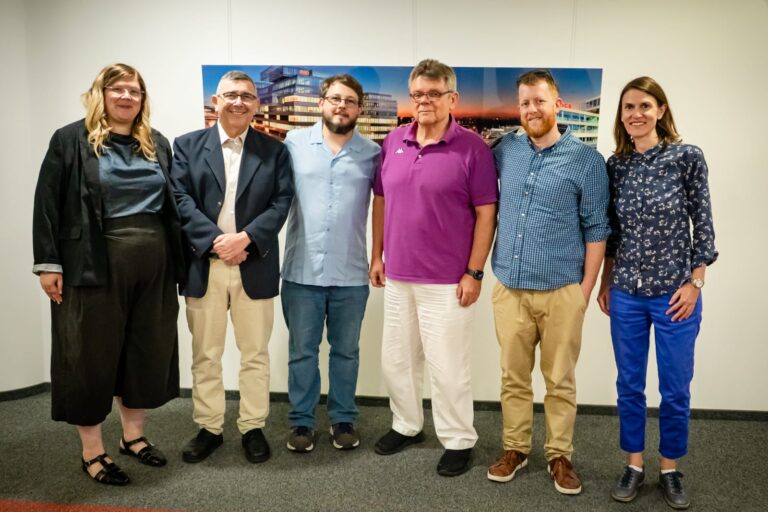
Last week, I returned from a professional delegation to Austria on behalf of the Histadrut. The delegation was headed by Tomer Reznik, Deputy Chair of the Histadrut and Chair of the Industrial Democracy Division, and included Adam Blumenberg, Head of the Trade Union Division and Deputy Director for Economy and Policy, and Micky Drill, Project Manager at the Friedrich Ebert Stiftung (FES) in Israel. We travelled with the aim of gaining first-hand insight into the Austrian model of worker participation in decision-making, particularly on company boards.
Our hosts, the ÖGB, prepared an intensive schedule for us, during which we met with experts and professionals from every level of the labour relations system: at the federation, trade union and workers’ council levels, as well as representatives of the key social partners – the Ministry of Labour, the Chamber of Employers and the Chamber of Labour.
The historical foundations of the austrian model
The foundations of what can be seen today in Austria were laid as early as the First World War, when the workers’ movement grew stronger to the point that the government could no longer ignore it. The Workers’ Constitution, enacted in 1919, has continued to exist in its basic form to this day, after being reinstated, with the necessary modifications, following the end of Nazi rule. In 1974, the new Labour Act came into force, establishing a more up-to-date framework for worker participation in decision-making and continuing to serve as a compass for labour relations in the country even fifty years later.
Austrian law places an emphasis on transparency, democracy and stability. Workers’ councils are required to stand for election every five years, according to established procedures and regulated requirements. By law, the council is obligated to hold workers’ assemblies twice a year, present its work, and explain in black and white what has been done on behalf of employees. Just as in Israel, Austrian law also completely prohibits the dismissal of workers’ council members.
Collective agreements protecting 98% of the workforce
One of the most remarkable points we learned concerns collective agreements. In Austria, 98%, an overwhelming majority of the country’s entire workforce, are covered by a collective agreement.
Negotiations take place first and foremost at the sectoral level. Every year, in most cases, trade unions, elected workers’ representatives, the Chamber of Labour, the employers’ chamber and the Ministry of Labour come together to discuss updates to terms and demands. Together, they renew the agreements for an entire sector.
The Austrian model is built around two central institutional bodies that are worth becoming familiar with:
- The Chamber of Employers: An institutional body to which the vast majority of employers and self-employed people in the country are legally required to contribute a percentage of their income, and in which they have influence over its leadership.
- The Chamber of Labour: Unlike the government Ministry of Labour, this is an institutional body that operates on behalf of all workers in the country. Workers are legally required to contribute 0.5% of their wages to it and have influence over its leadership.
In comparison with Israel, a significant part of the Chamber of Labour’s work corresponds to the work carried out by the Histadrut; from negotiating collective agreements, through providing legal assistance in cases of unfair dismissal, to funding professional training programmes and activities aimed at improving consumer relations. However, the Chamber does not have the authority to organise strikes. That power remains solely in the hands of the trade unions.
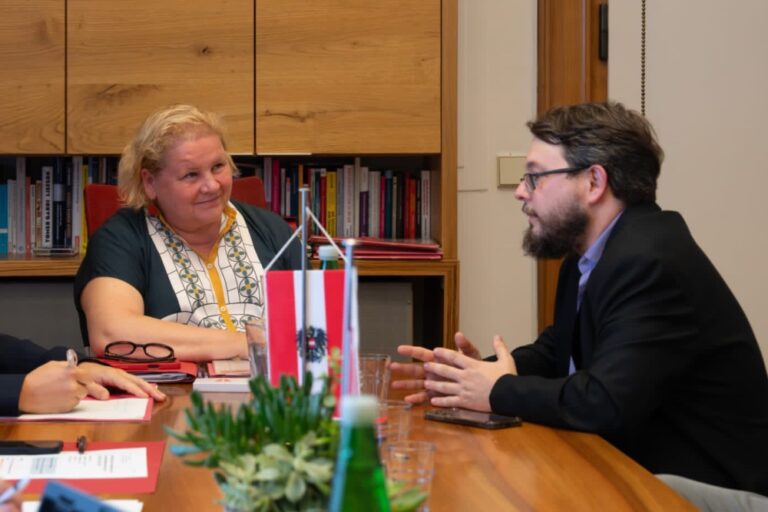
In a certain sense, workers in Austria hold greater power at the negotiating table. Across the negotiating table from employer representatives sit not only the ÖGB, which represents around 30% of the workforce in a manner similar to the Histadrut, but also representatives of the Chamber of Labour.
Once the industry-wide agreement has been signed, workers’ councils in each factory and workplace conduct supplementary negotiations with local management, with the aim of further improving and adapting conditions at the workplace level.
Even in complex periods, such as the COVID-19 pandemic or periods of rising inflation, the trade unions and social partners sit together to determine how to protect workers’ conditions and the workforce itself. During a meeting at the Chamber of Employers, we were told that for an employer who has invested years in the professional training of their employees, the worker is viewed as an asset to the organisation.
At the height of the pandemic, when workplaces were forced to reduce their activity, employers turned to the trade unions and the Chamber of Labour in order to reach agreements that would preserve jobs and keep workers employed. From the ÖGB’s perspective, navigating negotiations over reductions in working hours and wages was not simple. But in hindsight, these agreements helped maintain relative stability in the labour market.
Worker board participation in practice
The central idea enshrined in Austria as early as 1919 is simple and rooted in principle: the workforce that drives a company and generates its revenues is entitled to take part in decisions about its operations. Historically, the focus was primarily on economic issues. However, during the delegation we came to understand that, thanks to the systems in place today, workers’ councils are increasingly engaged with other areas as well. From negotiations over wages, through protection and representation in proceedings with employers, to active participation on company boards, workers’ representatives are increasingly focused on social issues and labour rights, such as privacy protection, workplace procedures during periods of extreme heat, and work-life balance.
Unlike the German model, in Austria the worker representatives who sit on company boards must necessarily be members of workers’ councils and representatives elected directly or indirectly by all employees. In companies employing more than 100 workers, such as publicly traded companies, limited companies, and any company with a board of directors, excluding organisations with a clearly political character, the law requires that one-third of board members be worker representatives.
For worker representatives, the central significance of employee presence on company boards lies in gaining access to strategic information about the company’s situation. Whether it concerns data on the company’s financial position or strategic directions being considered by management, the ability of the workers’ council to understand the organisation’s deeper processes is no less important than its ability to make workers’ voices heard and influence decisions.
When strategic information is accessible to the workers’ council, it creates a stronger, more professional and more substantive foundation for the demands brought to the negotiating table with management each year. This form of participation deepens, among the council and employees, a sense of belonging and a willingness to work in partnership alongside company management towards a better shared future.
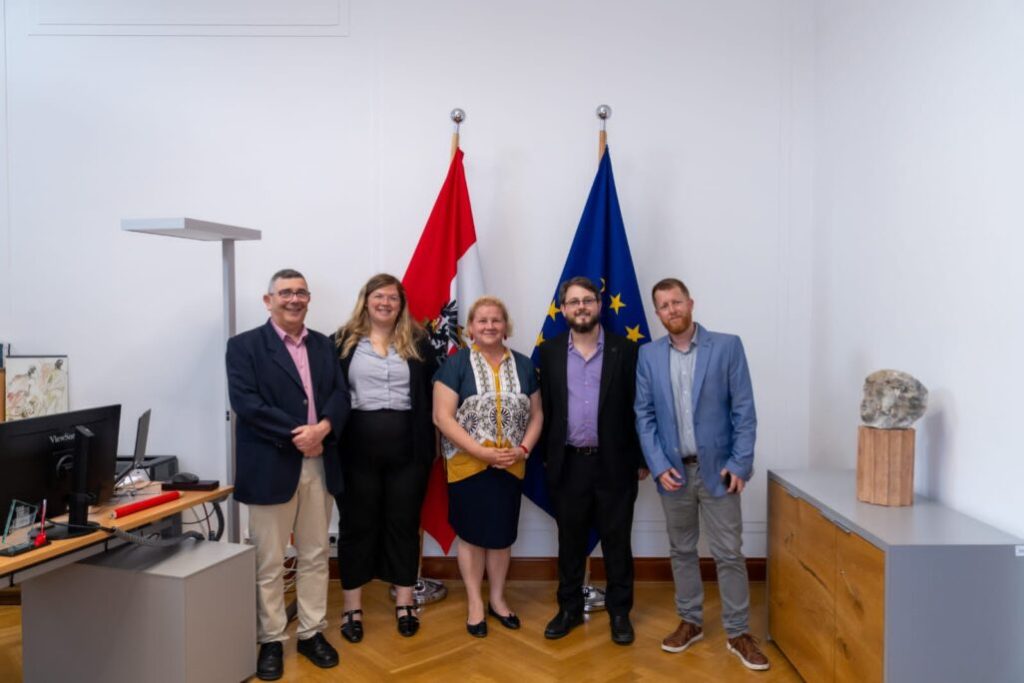
In our meeting with Minister of Labour, Social Affairs and Health, Korinna Schumann of the SPÖ, as well as in our conversation with ÖGB President Wolfgang Katzian, we came to understand that worker participation in decision-making is not perceived in Austria as a confrontational tool or as a stick placed in the wheels of management, but rather as a partnership that, in every respect, serves as a safety net. One that creates trust, economic stability and long-term growth for the economy as a whole.
Looking toward Israel
When reflecting on the lessons from the delegation, the central question that emerged was what we in Israel can learn from the Austrian model and from our counterparts there.
In this context, we quickly discovered the many similarities between our federations. The Director of International Relations at the ÖGB, who designed the program for us, reminded me that prominent Austrian Jewish figures were among the founders of the Histadrut, meaning that, from his perspective, the structural similarities are far from coincidental. Indeed, the deep historical roots of the labour movement in Austria are reflected in the strength of the country’s workers’ movement to this day.
Adam Blumenberg, Head of the Trade Union Division and Deputy Director for Economy and Policy, highlighted the strategic importance of the model: “The visit to Austria provided a fascinating glimpse into a unique system of collective labour relations, based on the Social Partnership model, which has successfully maintained exceptional levels of economic stability and industrial peace for decades.”
“The meeting with ÖGB President Wolfgang Katzian demonstrated to us how a reliable and strong bilateral partnership with such a central trade union is not merely a tool for protecting workers, but also a strategic anchor for national growth and crisis management. Learning about their mechanisms of ‘industrial democracy’, from the level of works councils, which we visited at construction sites, to the Chamber of Labour, provided us with valuable tools and ideas for implementing and advancing progressive economic and social policies in Israel as well.”
Alongside the professional insights gained, the deeper significance of the visit was also in strengthening the international alliance and solidarity between the organisations.
As Histadrut Deputy Chair and Chair of the Industrial Democracy Division Tomer Reznik concluded: “I was pleased with the meeting with the ÖGB, which enabled meaningful learning about the similarities and differences between the labour markets and collective labour relations in Austria and Israel, with an emphasis on models for involving workers in decision-making. The trade unions in Austria are true partners of the Histadrut and demonstrated solidarity with workers in Israel even during a challenging period internationally. I would like to thank Wolfgang Katzian, President of the ÖGB, and Labour Minister Korinna Schumann for these meaningful meetings.”
This column was published first by Davar
Might interest you as well

Histadrut urges Israeli support for global convention on platform work at upcoming ILO conference


Histadrut responds to reports on “Hand Shakes Hand” affair: activities continue as usual

Chairman of the Histadrut demands PM intervention to save the daycare industry from collapse

Arnon Bar-David on Israel's 75th Independence Day: Israel's strength lies in the unity of its citizens


Salary and grant supplements: a special collective agreement for Partner employees

NIS 50 per hour: Agreement in Egged rise wages to the highest in the industry



Social workers declare a labor dispute after government announcement of privatization



62% of public workers admit to being affected by violence at work in the past year
Director of the International Relations Division addresses the International Labour Conference in Geneva