From railways to dairy: Histadrut draws red lines on 2026 economic overhaul
Earlier this week, the Histadrut issued a detailed letter outlining its stance on a series of structural measures proposed in the Draft Economic Arrangements Law for 2026, warning that several clauses could undermine workers’ rights, compromise public safety, and disrupt the operation of essential national systems
What is the Draft Economic Arrangement Law?
The Economic Arrangements Law is a piece of legislation presented annually to the Knesset alongside the state budget. It consolidates a broad range of economic measures, often spanning unrelated sectors, into a single, comprehensive proposal.
It is traditionally used as a vehicle for structural reforms. This year’s draft includes sweeping initiatives aimed at “liberalizing” key industries such as transportation, energy, and agriculture. Among the most contentious provisions are plans to outsource maintenance and operations of Israel Railways, grant private concessions for airports, dismantle dairy production quotas to allow greater imports, and revise municipal funding formulas.
Why is the Histadrut opposing multiple of the reforms?
The changes in The Economic Arrangements Law are presented as measures to foster competition, lower costs, and modernize service delivery. The Histadrut, however, disputes that narrative, because the plan prioritizes ideology over evidence and could introduce systemic vulnerabilities.
In the initial document prepared by the Histadrut’s Trade Union Division and submitted to the Ministry of Finance, the Histadrut warned of an expanding trend of privatization in infrastructure and essential services. Alongside opposition to broad structural reforms, the Histadrut also expressed support for targeted measures intended to strengthen employment and regulate unused assets.
“We are in favor of innovation and efficiency, but not at the price of uprooting essential infrastructures from the public’s hands and gambling on the future of Israel’s citizens,” Adam Blumenberg, Head of the Trade Union Division and Deputy Director for Economy and Policy at the Histadrut, said. “If the government chooses to advance reforms based on data, balance, and responsibility, we will be the first partners, as we know how to be. But if we see attempts to push through hasty moves whose sole purpose is to lead to uncontrolled privatization, we will not stand aside and we will defend the citizens and the workers in particular.”
Protecting safety and public interest in the railways and airports
The plan to privatise the railways is based on incorrect assumptions and ignores the steady improvement in punctuality and reliability achieved in recent years. Transport Union Chairman, Adv. Eyal Yadin has already warned that the experience in Israel and abroad proves that the privatizations sought by the plan would lead to higher costs, reduced technical competence, and harm to public service.
Privatization would dismantle accumulated professional knowledge, encourage precarious employment, and jeopardize operational continuity during emergencies. Israel’s railway workers have proven their ability to operate under rocket fire—foreign companies have never faced such conditions. Similarly, transferring airports to private operators poses unacceptable risks. Linking profitability to safety undermines oversight and crisis preparedness. A model driven by commercial interests cannot guarantee security when it matters most.
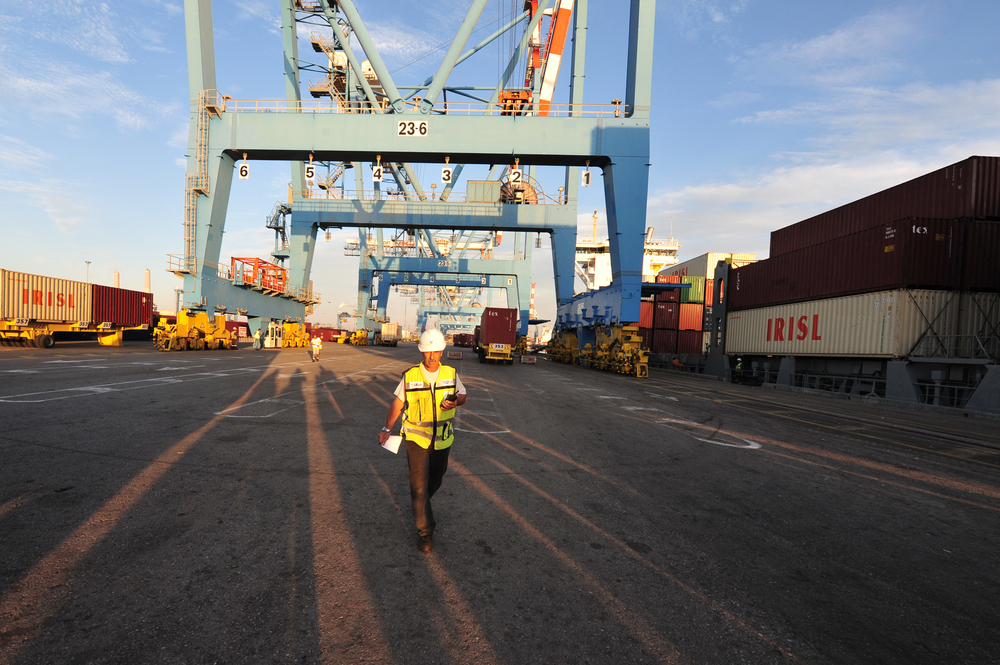
No basis for expansion in ports and energy services
The Histadrut rejects the promotion of new ports in Hadera and Ashkelon, given that there is no operational justification for this move. Expansion should only be considered after demonstrating 90% utilization of existing capacity over time.
Moreover, the plan essentially suggests stripping professional activity from the Electric Corporation and the Eilat-Ashkelon Pipeline Company, which will erode decades of expertise, compromise energy supply during emergencies, and create safety hazards. These proposals gamble with national resilience.
Agriculture, Local Services, and Tax Policy
The Histadrut strongly opposes cancelling dairy quotas and expanding imports. Such deregulation is unlikely to reduce consumer prices but will devastate small dairies, undermine employment in peripheral regions, and increase reliance on imports during times of crisis.
Other proposed measures, such as tax reforms, also pose risks to workers. The suggested widening of tax brackets would primarily benefit the wealthy rather than the middle class.
In addition, changes affecting local authorities threaten to weaken essential services. Tightening balance grants and implementing the Arnona (city tax) Fund would force municipalities into severe budget cuts, harming education, welfare, and community programs.

No reforms without safeguards
The Histadrut calls for a clear and unwavering principle to guide any reform: no structural change should proceed without transparent public debate and robust protections for workers and essential services. Economic modernization must not come at the expense of social justice or public safety. Any proposal should be subject to open consultation, with guarantees that jobs, critical infrastructure, and community services remain secure. Reforms must serve the people, not dismantle the foundations of decent work and social resilience.
This article is based on information published by Davar. in their article, you can read more about the Histadrut’s stance on the different reforms bundeled under the Draft Economic Arrangement Law.
Might interest you as well



Trade Union Advisory Committee to the OECD calls out the organization for flawed report

Government Employees Union's Newly Elected Chairman, Aims to Improve Working Conditions and Provide Better Service to the Public

New Initiative that Supports Workers Who Parent Children with Disabilities to Develop into a Society-Wide Position Paper

Israel Paying High Price for Crisis: Histadrut Chairman Reacts to Moody's Damning Review
Soroka’s staff stand strong: Health workers push on after missile strike in Be’er Sheva

Histadrut Chairman Arnon Bar-David calls for a national emergency government to form "as soon as possible" in the wake of the current crisis.



For the First Time: Employees of Rotem Industries elect representation on the Board of Directors

An address to the Histadrut's International Counterparts on the War Against Hamas and the Way Forward
Histadrut Chairman visits Arab municipalities, calls partnership a “Model for Israeli Unity”


Arnon Bar-David calls on the people of Israel to rally around President Herzog’s 5 point proposal