Lion’s Roar compensation framework leaves the most vulnerable at risk
Histadrut Chair Arnon Bar‑David has issued an urgent appeal to Finance Minister Bezalel Smotrich and Finance Committee Chair MK Hanoch Milwidsky, calling for immediate revisions to key clauses in the government’s proposed compensation plan for the economic fallout of “Loin’s Roar” operation. He stresses that the rigid outline presented in the plan risks inflicting disproportionate harm on hundreds of thousands of workers and undermining Israel’s economic resilience.

Since the launch of the operation on 28 February 2026, strict security directives have caused widespread disruption, reducing economic activity nationwide and harming the livelihoods of hundreds of thousands of workers. While the government’s legislative drafts contain several welcome elements, Bar-David argues that they remain rooted in outdated models that have already proven insufficient and do not meet the needs of this moment.
In his letter, Bar‑David reminds the government that Israeli workers have acted responsibly and collaboratively throughout the past two years. Workers were required to contribute some of their benefits to the government, sacrifice income due to work disruptions and collective agreements that reduced public workers’ income, and work under heightened risk to keep the economy going. Despite this, the proposed compensation outline places the heaviest burden precisely on those who complied fully with state instructions. He warns that the current plan exposes workers to significant wage losses and long‑term damage to their pension rights and social protections.
“We will not accept a framework that abandons workers who followed state directives and are now forced to absorb devastating losses to their wages and pension rights,” Bar‑David wrote.
Failures in the proposed unpaid leave model
The compensation outline continues to rely heavily on the unpaid leave model; unpaid leave is supported by unemployment benefits for those who worked for a certain period and were dismissed. It is primarily designed to allow dismissed workers a safety net to find a new job. Despite years of evidence showing its destructive effects on workers’ rights when used as a remedy when workers are unable to attend work in high-end security situations and others, it remains the default framework for the government to pursue.
The main problems Bar-David highlights in his letter, and demands that the government revise:
Punishing workers who returned to work quickly
The state is penalising responsible workers who sought a return to work after the first week of this conflict, when the Home Front Command relaxed restrictions. The plan requires a minimum 14‑day period of unpaid leave, meaning that instead of encouraging a return to normalcy, the government decided that workers who returned to work are not eligible for compensation.
Abandoning hourly and shift workers
Roughly 30% of Israel’s workforce is employed on an hourly or shift basis. Many of them, often from vulnerable populations, lose shifts rather than being formally placed on unpaid leave, meaning they receive no compensation whatsoever. They fall entirely outside the compensation mechanism.
Breaks in pension and social contributions
Unpaid leave benefits interrupt pension deposits and erode long‑term retirement savings. Workers are also forced to use up unemployment days intended for future layoffs, jeopardising their financial security.

Entire sectors left outside the safety net
Another major concern is the exclusion of multiple sectors from the proposed plan. Cultural institutions and public establishments remain in limbo due to the absence of clear eligibility criteria. The explicit omission of the agricultural sector, justified by technical considerations, is particularly troubling as it undermines national food security at a time when stability is essential.
Contract workers in the public sector, many of whom belong to the most vulnerable segments of the population, are offered no comprehensive protection despite inconsistent directives from various ministries. Public transportation workers, early childhood educators, and essential workers have all experienced reduced activity and income but have not been provided with suitable solutions.
Business compensation without worker protection
Bar‑David also criticises the business compensation component of the proposal. While it provides a safety net for employers, it does not require them to pay wages to workers absent due to security restrictions. This stands in stark contrast to past emergency frameworks. Furthermore, the partial reimbursement formula may incentivise employers to send workers home (without having to pay them) rather than maintain workplace continuity, as they can preserve profitability by reducing their active workforce.
A worker-centred compensation model for national stability
To address these gaps, Bar‑David calls for adopting a more equitable, worker-centred model. At the heart of his proposal is a return to the historic “wage protection track” used in the Property Tax and Compensation Fund regulations. In this model, employers continue to pay full wages to workers who were absent due to school closures or security directives, and the state fully reimburses employers at a fixed daily rate of 550 NIS. This approach is essential for preserving economic stability and maintaining the employer‑employee relationship during emergencies.
Improvements to the unpaid leave framework, including allowing workers to initiate unpaid leave in cases involving parents of young children, parents of children with disabilities, displaced persons, or hourly workers. Additionally, any employer receiving state compensation must pay full wages for security‑related work absences, consistent with the precedent set during Operation Iron Swords.

Bar‑David concluded the letter with a clear warning: advancing the proposed compensation legislation without substantial improvements will cause “disproportionate harm to the workers of Israel and to national resilience.”
It is too familiar that in emergencies, whether conflict, climate‑related disasters, or pandemics, governments and employers tend to shift the economic burden onto workers. The Histadrut is determined to reaffirm that fair compensation, robust social‑protection systems and reliable wage‑guarantee mechanisms are not optional conveniences but essential pillars of economic resilience, human dignity and social cohesion. Therefore, Bar-David calls on the government to adopt a fully inclusive framework that addresses the needs of every worker who has shouldered the burden of the crisis since the first day of the operation.
To read more about the Histadrut’s calls for a fair compensation framework and negotiated agreements:
- Compensation framework for public sector workers affected by operation Lion’s Roar
- After intensive negotiations, full compensation for daycare workers in state‑supervised early‑childhood centres
- Histadrut pushes for adjustments to Finance Ministry’s compensation framework
- Histadrut demands immediate compensation framework amid “Lion’s Roar”operation
Might interest you as well

Maintaining resilience and continuity – Histadrut message to workers amid “Operation Lion’s Roar”

Freesbee workers in Israel escalate labor dispute, demand first collective agreement

New Collective Agreement Signed for Bank Hapoalim Employees, Ensuring Job Security and Wage Increases

62% of public workers admit to being affected by violence at work in the past year
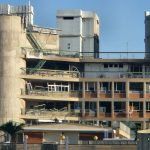
Soroka’s staff stand strong: Health workers push on after missile strike in Be’er Sheva



Eid al-Fitr brings unity: Histadrut reaffirms support for Palestinian workers, seeks to expand vocational training initiatives